January Classes Are Different—Here’s How to Teach Them
January yoga classes are filled with two kinds of students: the regulars who’ve been showing up for years, and the newcomers who are quietly terrified they don’t belong.
The regulars are fine. They know where to put their mat. They know how to modify. They know your rhythms.
But the new students—the ones who just signed up because of a resolution they’re already second-guessing? They’re watching everything. Where people stand. How loud the breathing is. Whether anyone else looks as lost as they feel.
After 20+ years of teaching yoga, I can tell you this: new students aren’t evaluating your choreography. They’re evaluating whether they can survive your class and come back next week.
This is not the month to debut your most creative sequence.
Here’s how to welcome new yoga students so they actually stay.
Why the First Few Classes Matter So Much
New students are making a decision—usually within the first few minutes of class. The question running through their minds isn’t “Is this teacher good?” It’s “Am I in the right place?”
When they don’t know the answer, anxiety takes over. They spend the whole class wondering if they’re doing it wrong instead of actually being present in their bodies.
Your job as the teacher is to answer that unspoken question before they even have to ask it.
When students know what to expect, they can actually be present. When they don’t have to guess whether they’re doing it “right,” they can relax into their bodies.
That’s when the real yoga happens.
5 Ways to Welcome New Yoga Students
1. Teach the Class Description
If your class says “gentle yoga,” teach gentle yoga. If it says “all levels,” make sure a true beginner can follow along.
Students picked your class for a reason. The description felt safe. They read it carefully, probably multiple times, before committing. When you honor that description, you honor their trust.
Don’t decide mid-class that everyone looks ready for more. Some students are very good at hiding their struggle. Predictable is calming—especially for newcomers.
2. Offer Options Like It’s Normal
Because it is.
Don’t make a big announcement about “modifications for beginners.” That puts a spotlight on the people who are already feeling self-conscious.
Instead, offer choices as part of your regular instruction:
- “Hands can stay on hips, or reach overhead.”
- “Knee can stay down, or lift if that feels right today.”
- “You might stay here, or alternatively . . .”
No shame. No spotlight. Just options woven into the flow of teaching.
When options are normal, nobody feels broken when a pose doesn’t work for them.
3. Give Explicit Permission to Rest
Say it out loud. More than once.
New students don’t know they’re allowed to take child’s pose whenever they want. They think they need to keep up with everyone else. They think resting means failing.
Tell them directly: “You can rest anytime. Child’s pose is always available. You don’t need permission—but I’m giving it to you anyway.”
This small statement can change someone’s entire experience of your class.
4. Nail Your First Two Minutes
The first two minutes of your yoga class in January can determine whether a new student comes back.
Don’t give a performance. Don’t give a lecture. Don’t give a ten-minute dharma talk about the history of yoga.
Offer the kind of clarity that lets people exhale.
Try something like this:
“Welcome. If you’re new, you’re in the right place. Here’s how class will go today: we’ll start seated, move through some standing poses, then come down to the mat for floor work and a rest at the end. You’ll hear options the whole time. And you can rest anytime you need to.”
That’s it! Clear, warm, and true.
5. Make the Room Easy to Navigate
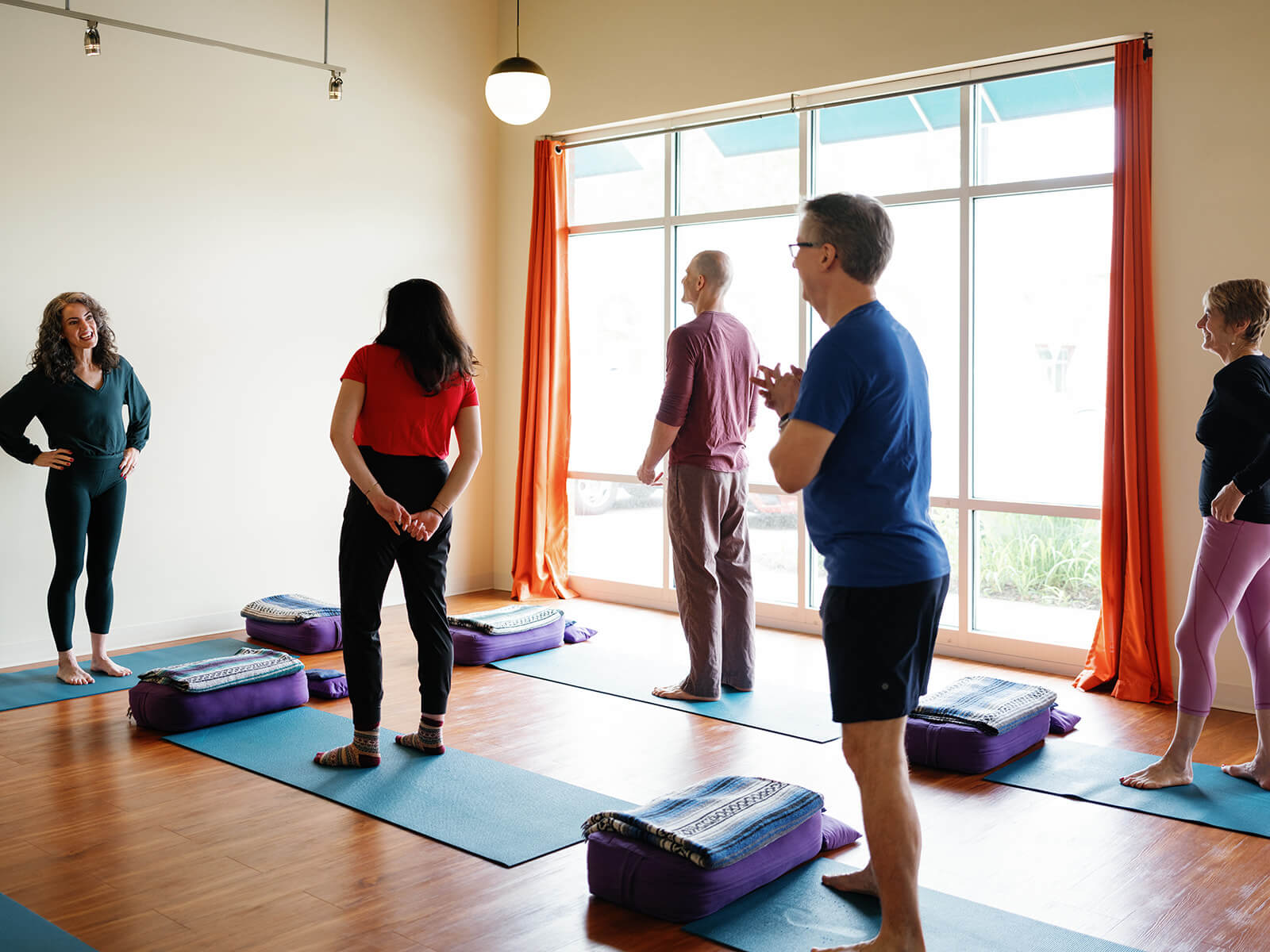
New students don’t know where to put their mat. They don’t know which props to grab. They don’t know where the bathroom is or if they’re allowed to leave during class.
Make it easy:
- Point out where props are and which ones they might want—or better yet, set out props for everyone
- Let them know where to set up if the room has a standard layout
- Mention that it’s fine to step out if they need to
These tiny pieces of information remove the guessing—and guessing is exhausting when you’re already nervous.
What New Students Actually Need From You
You don’t need to be advanced in January. You don’t need to be impressive or creative or innovative.
You need to be steady, predictable, and trustworthy.
You need to be the kind of teacher who makes people feel like they can exhale.
When you focus on welcoming new students instead of wowing them, something shifts. They stop watching the clock. They stop comparing themselves to the person next to them. They start to settle in.
And that’s what keeps students past February.
The Long Game of Student Retention
January students who feel welcomed in their first few classes become February regulars. February regulars become the students who show up all year long.
They become the ones who bring their friends. The ones who sign up for your workshops. The ones who tell other people, “You have to try this teacher.”
It all starts with those first moments of feeling like they belong.
Your welcome doesn’t need to be effusive—that can feel weird. It only needs to be clear, warm, and true.
Ready for more support on building classes that make students feel like they belong?
Join the Zone, my free community for yoga teachers where we talk about exactly these kinds of teaching strategies.