When I first started teaching yoga at the UNC Wellness Center—which is affiliated with the hospital system—I had to complete mandatory online training modules about blood-borne pathogens, proper needle disposal procedures, and chemical safety protocols.
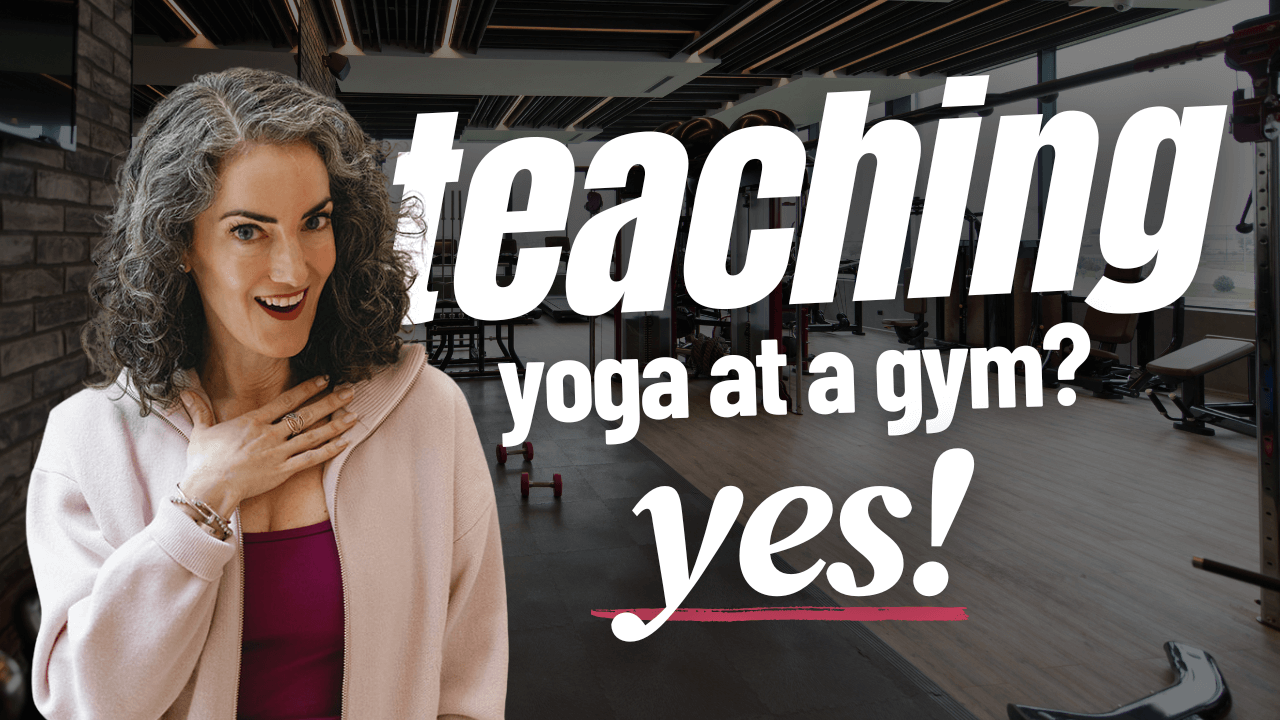
I was teaching yoga. In a gym. With people in sweatpants doing downward-facing dog.
The odds of encountering a biohazard spill during my Wednesday evening yoga for athletes class were approximately zero. But because I was technically a UNC Hospitals employee, I dutifully clicked through the modules, passed the quizzes, and earned my certification in hospital safety procedures. They paid me for that training time, and there were snacks at the in-person meetings—so I wasn’t complaining.
Teaching at gyms and YMCAs often gets dismissed as a consolation prize—what you do when you can’t get hired at a yoga studio. But I taught at the UNC Wellness Center for six years, until I bought what’s now Carrboro Yoga Company. And I can say without hesitation that those six years of teaching in a gym environment made me a dramatically better teacher than I would have been if I’d started in a boutique studio.
Let me tell you why gym teaching is one of the best possible training grounds for becoming a skilled, adaptable yoga teacher.
Why Gyms and YMCAs Are Excellent for New Teachers
The application process for teaching at a gym is refreshingly straightforward. Unlike yoga studios—where you typically need to practice for weeks, build relationships with existing teachers, and wait patiently for an opening—gyms have a clear checklist of requirements. You need your yoga teacher certification, possibly your Yoga Alliance registration, liability insurance, and the ability to show up consistently. That’s usually it.
At the UNC Wellness Center, I couldn’t be officially hired until I was registered with the Yoga Alliance. Other gyms might have different requirements, but the point is this: it’s usually a clear credential check, not a subjective assessment of whether you fit the culture. For new teachers trying to get their foot in the door and start accumulating teaching hours, this straightforward process is invaluable.
The compensation can also be surprisingly good when you look at the total package. According to recent surveys, gym yoga teachers typically earn between twenty and forty dollars per class. That might sound lower than some studio rates, but you usually get a free gym membership as part of your compensation. If you’d be paying for a membership anyway, that’s real value—potentially fifty to one hundred dollars per month or more.
But here’s the benefit that was absolutely huge for me when my daughters were little: many gyms and YMCAs offer free childcare while you teach. When you’re a new parent trying to maintain your teaching practice without spending your entire paycheck on babysitters, this is gold. I could drop my girls off at the childcare room, teach my class, pick them up afterward, and not pay a cent. That benefit alone made teaching at the Wellness Center financially worthwhile during those years.
The Real Training Ground: Large, Diverse Classes
This is the big one. This is why teaching at a gym makes you a better teacher faster than almost anything else you could do.
Gym yoga classes are typically much larger than studio classes. At a studio, you might have eight to fifteen students. At a gym, you might easily have twenty-five, thirty, or even forty people in the room. That’s a lot of bodies at a lot of different experience levels, and you need to figure out room management on the fly.
Those students are coming from everywhere. Some might have extensive yoga experience. Others have literally never done yoga before and are showing up because the class is included in their gym membership and they figured they’d give it a try. In my classes at UNC, I regularly had the ultra-fit CrossFitter who couldn’t touch their toes, the seventy-year-old retiree who’d been doing yoga since the 1970s, the college student at their first group fitness class, the physical therapy patient there on doctor’s orders, and the stressed-out hospital employee who just needed to breathe for an hour.
All in the same room. All at the same time.
This forces you to become really good at offering modifications and meeting people where they are. You can’t teach to one level. You can’t assume anyone knows what you’re talking about. You have to find that lowest common denominator—something everyone can do—and then offer clear options for people who want more challenge or need more support. This skill is what makes you an excellent teacher, and you develop it fast when you’re teaching in a gym.
Learning to Teach without Props
Gyms typically have far less yoga-specific equipment than studios. Studios usually have lots of yoga mats, abundant blocks and straps and bolsters and blankets, props for days. Gyms usually have some mats—maybe, and they’re often thin and slippery—and a few blocks if you’re lucky. That’s about it.
This means you have to learn to improvise. You teach poses and sequences that work without props, or you get creative about substitutes. A thick book or folded towel becomes a bolster. Students use their hands on their shins instead of reaching for blocks. A belt or gym towel replaces a yoga strap.
You learn to cue clearly without relying on props to do the work for you. You learn to offer verbal adjustments instead of just saying “grab a block if you need one.” This makes you so much more versatile as a teacher. When you eventually teach in other settings—private lessons, outdoor classes, retreats, workshops—you’re not dependent on having the perfect prop collection.
Teaching thirty-plus people in a large multipurpose room also teaches you how to use your voice effectively. You can’t be soft-spoken and expect people in the back to hear you. You have to project—finding that balance between a calm, grounded yoga voice and actually being loud enough to be heard over the air conditioning and the aerobics class next door. You learn to position yourself so you can see everyone, to move through the room efficiently, to give clear directions about spacing and mat placement. These room management skills transfer to every other teaching context.
The Real Challenges of Gym Teaching
Let me be honest about the challenges, because they’re real. Studios are designed for yoga—they have controllable lighting on dimmers, temperature control, quiet spaces separated from other activities, yoga-specific ambience. Gyms have fluorescent overhead lights you can’t dim, temperature set for the whole building, noise from adjacent spaces like the weight room and basketball court, and a distinctly un-zen vibe.
You’re teaching in a multipurpose room that hosted Zumba an hour before yours and will host spin an hour after. The carpet might smell like sweat. The walls might be cinder block painted institutional beige. This is not the serene, candlelit yoga sanctuary of your dreams.
But here’s what it teaches you: you learn to create a container for your students regardless of the external environment. You learn that the practice isn’t about the perfect ambience—it’s about what happens in your students’ bodies and minds. Some of my most meaningful teaching happened in that fluorescent-lit multipurpose room at UNC, because the students who showed up there really needed yoga. They didn’t need it to be Instagram-worthy to benefit from it.
Gym students often come to yoga with different expectations than studio students. Studio students often want the whole package—philosophy, breath work, meditation, spiritual elements. Gym students often want a workout. They want to move, sweat, stretch, and feel like they accomplished something physical.
This doesn’t mean you can’t teach them yoga. It means you need to meet them where they are. You might not spend much time on Sanskrit terminology or yogic philosophy. You might focus more on physical benefits—strength, flexibility, balance, stress relief. You structure classes to feel more like a workout session with a relaxation period at the end. And that’s good, actually. You’re making yoga accessible to people who might never walk into a studio. You’re serving students who need exactly what you’re offering.
Practical Strategies for Success
If you’re ready to pursue a gym teaching position, start by making a list of gyms, recreation centers, and YMCAs in your area. Visit their websites or call to ask if they offer yoga classes, if they’re currently hiring instructors, what their requirements are, and who to contact about teaching. Many larger facilities have online application processes where you submit a resume and cover letter, though usually with less emphasis on having practiced there first than studios require.
Make sure you have your yoga teacher certification, your Yoga Alliance registration if you have it, your liability insurance, and a current resume highlighting any teaching experience. Some facilities might ask you to teach a sample class or demonstrate your teaching for the fitness director—this is usually more formal than studio auditions, showing your sequencing, cueing, and presence to staff members.
Be prepared for bureaucracy. Depending on the facility, you might need to complete a background check, provide proof of CPR certification, complete facility-specific training, attend orientation about policies and procedures, and get trained on their check-in or scheduling systems. This might feel like overkill for teaching yoga, but it’s just part of working within a larger organization. Do the trainings, pass the quizzes, eat the snacks at the meetings.
Once you’re hired, visit the space where you’ll be teaching before your first class. Survey the equipment situation—what mats and props are available, whether there’s a sound system, where students enter and exit. Plan for large diverse groups by designing sequences that work without props, offering at least two options for every pose, and using inclusive language that meets students where they are.
Focus on clarity, volume, visibility, and consistency in your first few classes. You don’t need to be fancy—you need to be clear, consistent, and helpful. Over time, you’ll develop a core of regular students who help set the tone for newer students and spread the word about your class.
The Long-Term Value
Is gym teaching just a stepping stone to “real” yoga teaching at a studio? Not necessarily. Some teachers teach at gyms for years or even decades because it genuinely works for them—good benefits, consistent schedule, variety of students, meaningful and rewarding teaching. I only left the UNC Wellness Center when I bought what became Carrboro Yoga Company. If that opportunity hadn’t come along, I might still be teaching there.
Other teachers do use gym teaching as a way to build experience and confidence before approaching studios or starting their own classes, and that’s a perfectly good strategy too. Either way, the skills you build teaching at a gym translate to every other teaching context: room management with large groups, clear accessible cueing for beginners, adaptability without ideal conditions, serving students who need yoga but might never identify as yoga people, teaching effectively without relying on props, projecting your voice and your presence.
The best teachers I know are the ones who can teach anywhere, to anyone, under any conditions. Gym teaching builds that versatility better than almost anything else. You’ll teach hundreds of students, learn to communicate clearly and adapt on the fly, develop rock-solid room management skills, and figure out how to create meaningful experiences even when conditions aren’t perfect. You’ll become a better teacher, faster, than you would in almost any other setting.
Look, I know gym teaching doesn’t have the cachet of teaching at a fancy boutique studio. Nobody’s going to Instagram your fluorescent-lit multipurpose room. But you will serve students who genuinely need what you’re offering—students who might be intimidated by a yoga studio, who are just trying to move their bodies and manage their stress and maybe touch their toes someday. These students deserve great teachers. And gym teaching will make you one of those teachers.
Want to hear more about building a sustainable yoga teaching career? Listen to the full episode of Yoga Teacher Confidential where I share detailed strategies for approaching gyms, managing challenges, and setting yourself up for success: