
a complete 200-hour yoga teacher training curriculum—ready for your studio
You have the studio, the students, and the teaching chops. What you need is a curriculum built by someone who literally wrote the textbooks—with dual accreditation support, content in three formats (video, audio, written), and a post-graduation ecosystem that keeps your graduates growing long after they finish.


I’m Sage Rountree—author of 13 books on yoga and teaching, including the required texts for this 200-hour program.
I’ve spent 20+ years training yoga teachers, and I built a curriculum I’d trust anyone to deliver. Now I’m looking for the right partners to bring it to their communities.
You want to run a teacher training. You shouldn’t have to build one from scratch.
Running a yoga teacher training is one of the most rewarding—and most demanding—things a studio can do. It deepens your community, positions you as a leader, and creates a meaningful revenue stream.
But building a 200-hour curriculum from the ground up? That’s a different project entirely. You’re looking at months of development, navigating Yoga Alliance standards, sourcing materials across anatomy, philosophy, ethics, sequencing, and pedagogy—and still wondering whether what you’ve built actually prepares people to teach.
Maybe you’ve thought about it and kept putting it off because the scope feels overwhelming. Maybe you’ve tried and hit a wall with the accreditation process. Maybe you’ve seen other studios offer trainings that produce graduates who aren’t ready—and you refuse to do that.
Here’s the thing . . . you don’t have to choose between doing it all yourself and not doing it at all.
What if the curriculum was already built—by the person who wrote the books?
The Comfort Zone Yoga 200-Hour Yoga Teacher Training curriculum has been developed over a decade of in-person trainings, refined across multiple cohorts, and built on four textbooks I authored—the same books other programs already use as required reading.
I’m exploring partnerships with studio owners and experienced teachers who want to bring this curriculum to their own students, in their own communities—without spending years building something from scratch.
You bring the space, the students, and the local mentorship. I bring the curriculum, the frameworks, the accreditation pathway, and the ongoing support.
Together, we train teachers who are actually ready to teach.
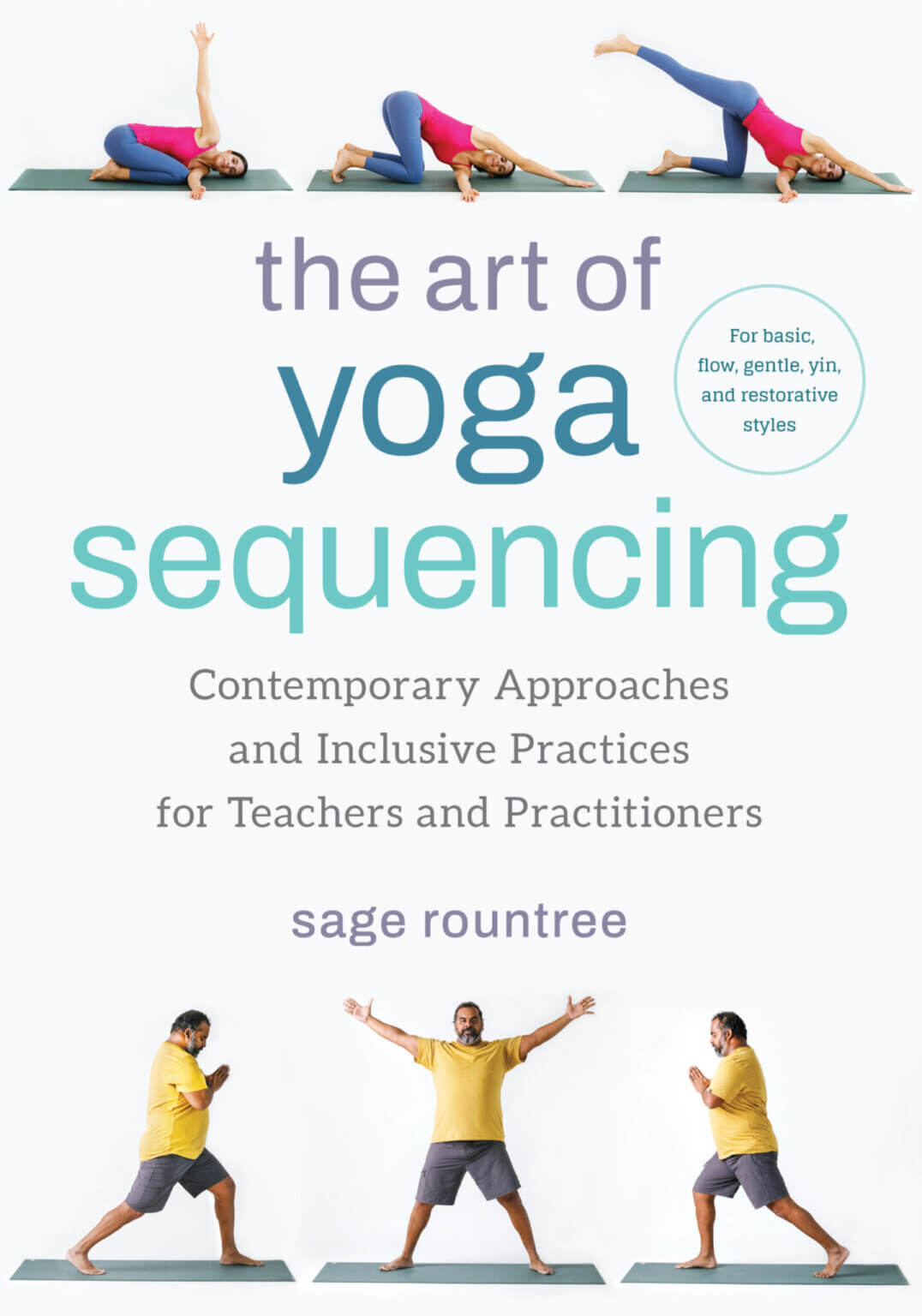
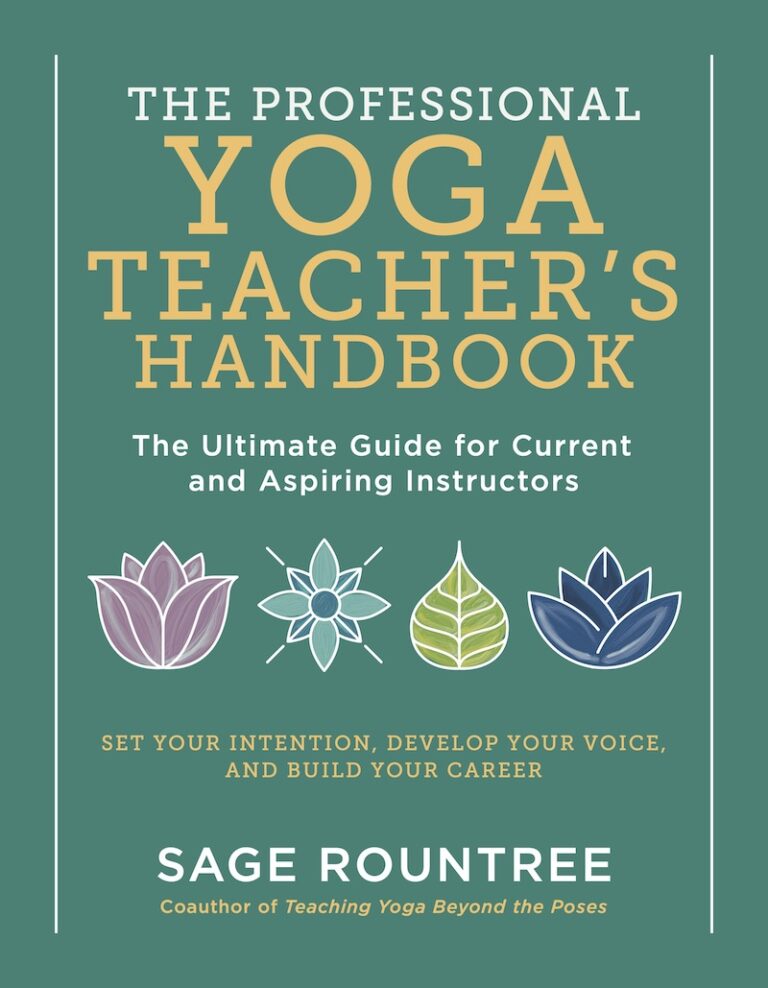
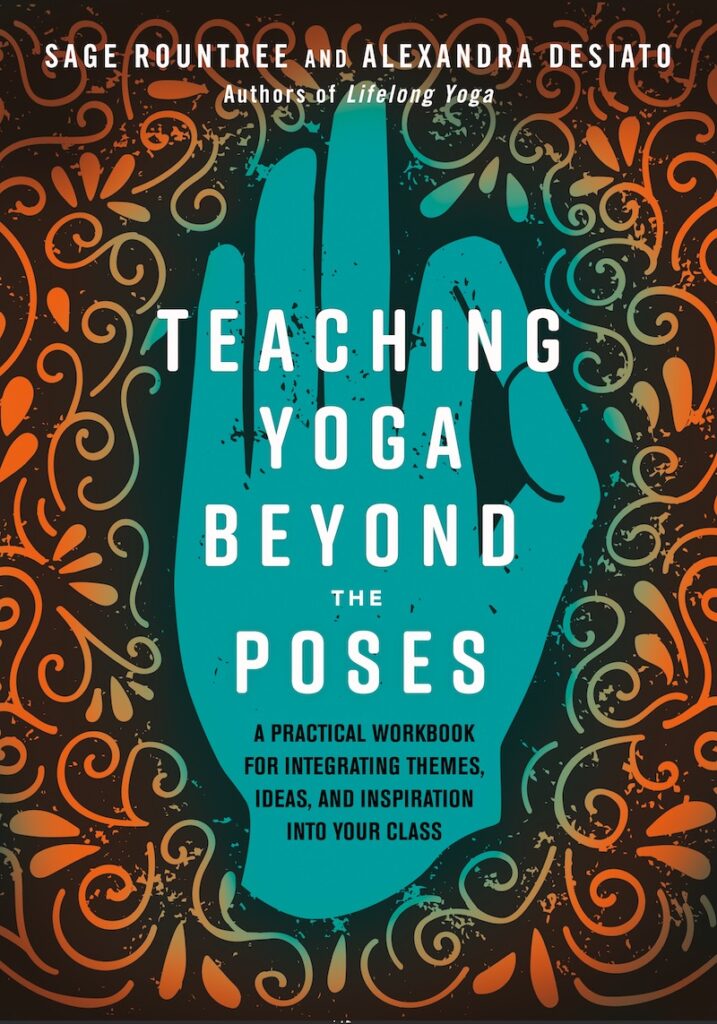
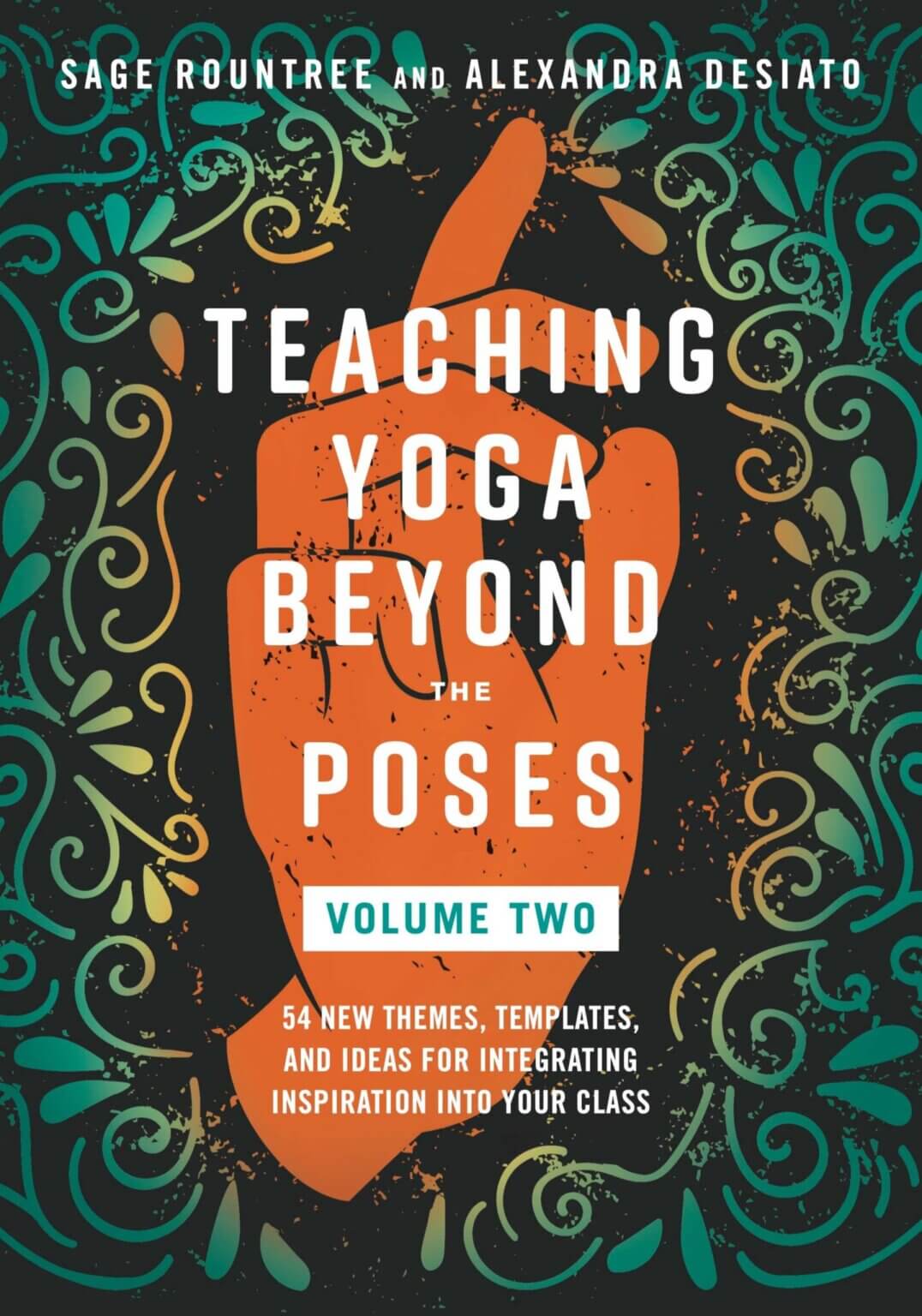
what you get when you partner with Comfort Zone Yoga
a complete 200-hour curriculum in three formats
Every lecture, demonstration, and teaching module delivered as video, private podcast, and full transcript—so your students can learn in the format that works best for them and so the curriculum translates across languages and learning styles.
four required textbooks—all authored by Sage Rountree
This isn’t a curriculum stitched together from other people’s work. The books are mine. The frameworks are mine. The intellectual property is original, cohesive, and field-tested. Your students learn from the source.
the S.E.R.V.E. Method and 6–4–2 Framework
Access to my Teaching Yoga to Athletes library and hard-to-find books to help you understand the athlete’s mindset.
dual accreditation
Registry with both Yoga Alliance (RYS 200) and the American Yoga Council—giving your program a credibility layer no other white-label yoga teacher training curriculum on the market offers.
facilitator training and onboarding
Your lead instructor gets trained on the curriculum, the frameworks, and the delivery model before your first cohort begins. You’re not buying materials—you’re being equipped to deliver them at the level they deserve.
student assessment tools
Practicums, quizzes, sequencing assessments, and evaluation rubrics—all built and ready to use.
marketing templates and assets
Materials to help you promote your program with confidence and professionalism.
a post-graduation ecosystem for your graduates
Every graduate gets access to the Prep Station membership (six months included) and to Comfort Zone Yoga’s free professional community. They don’t finish and disappear—they enter an ongoing support system that keeps them developing as teachers.
how to start a yoga teacher training program at your studio
Step 1: Start a conversation.
Fill out the inquiry form below. Tell me about your studio, your teaching background, and what you’re envisioning for your program. This isn’t a commitment—just a conversation about whether this is a good fit.
Step 2: We design the partnership.
Every studio is different. We’ll work out the model that makes sense for your situation—how you’ll deliver the curriculum, how accreditation works, what your facilitator training looks like, and how the economics play out.
Step 3: Get trained and launch.
Your lead facilitator goes through the onboarding process, your marketing goes out, and you open enrollment. The curriculum is handled. Your job is what you do best: mentor, observe, and guide your students through in-person practice.
the curriculum behind the numbers
4.89 out of 5 across 147 reviews on Yoga Alliance—from a decade of in-person teacher trainings.
13 published books on yoga, teaching, and athletic performance—including the four required texts for this program.
20+ years of training yoga teachers, from 200-hour certifications to advanced 300-hour pathways.
Dual accreditation: Yoga Alliance–registered and American Yoga Council–accredited.
Three delivery formats: video, private podcast, and full transcripts—designed for accessibility across learning styles and languages.
questions you’re probably asking
I’ve been teaching for 15 years. Do I really need someone else’s curriculum?
You don’t need it—you might want it. Building a 200-hour curriculum from scratch takes hundreds of hours. This one is built on four published textbooks, proprietary frameworks, and a decade of refinement. Your expertise is in mentoring students and running your studio. This frees you to focus there instead of reinventing the wheel on anatomy lectures and philosophy modules.
Will it still feel like my program?
That’s the point. You’re the face of the program. You’re the one in the room with your students, observing their practice teaching, giving feedback, building community. The curriculum handles the didactic content—the classroom teaching that’s the same whether your students are in Durham or Denver. You handle everything that makes a training truly local and personal. If your studio is known for hot classes and lavender cold towels at the end of savasana, your trainees learn that from you—in your room, watching how you do it. If you have a particular approach to assists, or a way you welcome new students, or a playlist philosophy—that’s yours to teach. The curriculum gives them the professional foundation. You give them your studio’s DNA.
What about accreditation? That process seems complicated.
It can be. If you’ve been researching how to become a registered yoga school, you know the paperwork and compliance requirements add up fast. We will discuss options for registering as your own Registered Yoga School (RYS 200) with Yoga Alliance and with the American Yoga Council—so you’re not figuring it out alone—or operating under the Comfort Zone Yoga umbrella.
I’m not a studio owner—I’m an experienced teacher who wants to lead trainings. Is this for me?
Yes. If you’re an E-RYT 500 (or on your way there) and you’ve been thinking about running your own teacher training but the curriculum piece has been the sticking point, this partnership is designed for you too. You bring the teaching experience and the students. The curriculum is ready.
why this isn’t like other white-label yoga teacher training options
The white-label YTT market is small. If you’ve looked into where to buy a yoga teacher training curriculum, you’ve probably found either a generic manual you rebrand or an administrative service that helps you file paperwork with Yoga Alliance.
This is a curriculum built by the person who wrote the textbooks other programs assign. Grounded in exercise physiology and pedagogy—not anatomy memorization or “just be creative.” It comes with proprietary frameworks (S.E.R.V.E. Method, 6–4–2 Framework) that give your graduates a genuine professional skill, not a credential they’re unsure how to use.
And it doesn’t end at graduation. Your students enter a post-graduation ecosystem—Prep Station, the Zone, advanced training pathways—that keeps them developing as teachers for years. No other yoga teacher training curriculum on the market does that.
The result for you: a program your graduates are proud of, a training that builds your studio’s reputation, and a partnership with someone who cares as much about the quality of your program as you do.
frequently asked questions
How much does the partnership cost?
The model is flexible—I’m working with each partner individually to find the structure that fits. Options range from licensing fees to per-student models to hybrid arrangements. Start a conversation and we’ll figure out the right fit for your situation.
Do I need to be a studio owner?
No. This partnership is also designed for experienced yoga teachers (E-RYT 200 or above) who want to run their own teacher training—whether you have a physical studio, rent space, or plan a hybrid model.
Can I modify the curriculum?
The core curriculum stays intact—that’s how we maintain quality and accreditation standards. But you’ll add your own voice through the in-person components: practice teaching observation, mentorship, community building, and hands-on skills. That’s where your expertise shines
What qualifications do I need to be a facilitator?
You’ll need to be an E-RYT 200 at minimum (E-RYT 500 preferred) and complete the Comfort Zone Yoga facilitator training. This ensures you’re prepared to deliver the curriculum at the level it’s designed for.
How long does it take to get up and running?
From inquiry to your first cohort, plan for 3–6 months. That includes the partnership setup, facilitator training, Yoga Alliance registration, and your initial marketing push.
Is there geographic exclusivity?
That’s part of the conversation. Territory arrangements depend on the partnership model and your market.
What if I already have a Yoga Alliance registration?
Great—that may streamline the process. We’ll look at how the CZY curriculum integrates with your existing RYS status.
What if I run a small studio without a dedicated training room?
That’s one of the strengths of this model. The didactic curriculum—lectures, reading, quizzes—happens online through Comfort Zone Yoga. Your in-person hours focus on what actually requires a room: practice teaching, observation, hands-on skills, and mentorship. You’re maximizing your studio time for the work that can only happen face to face.
Is this a yoga teacher training franchise?
No. A franchise means standardized everything—same branding, same delivery, same experience at every location. This is a curriculum partnership. You use your own studio name, your own brand, your own teaching style. The curriculum provides the professional foundation and the accreditation pathway. Everything else is yours.
Can I use this to train my own teaching staff?
Absolutely. If you’ve struggled to find teachers who fit your studio’s culture, this is a way to grow them yourself. Run your best students or your current staff through the program and they graduate with professional best practices from the CZY curriculum and a deep understanding of how your studio serves its community. You can also open enrollment beyond your staff and build your teaching bench at the same time.
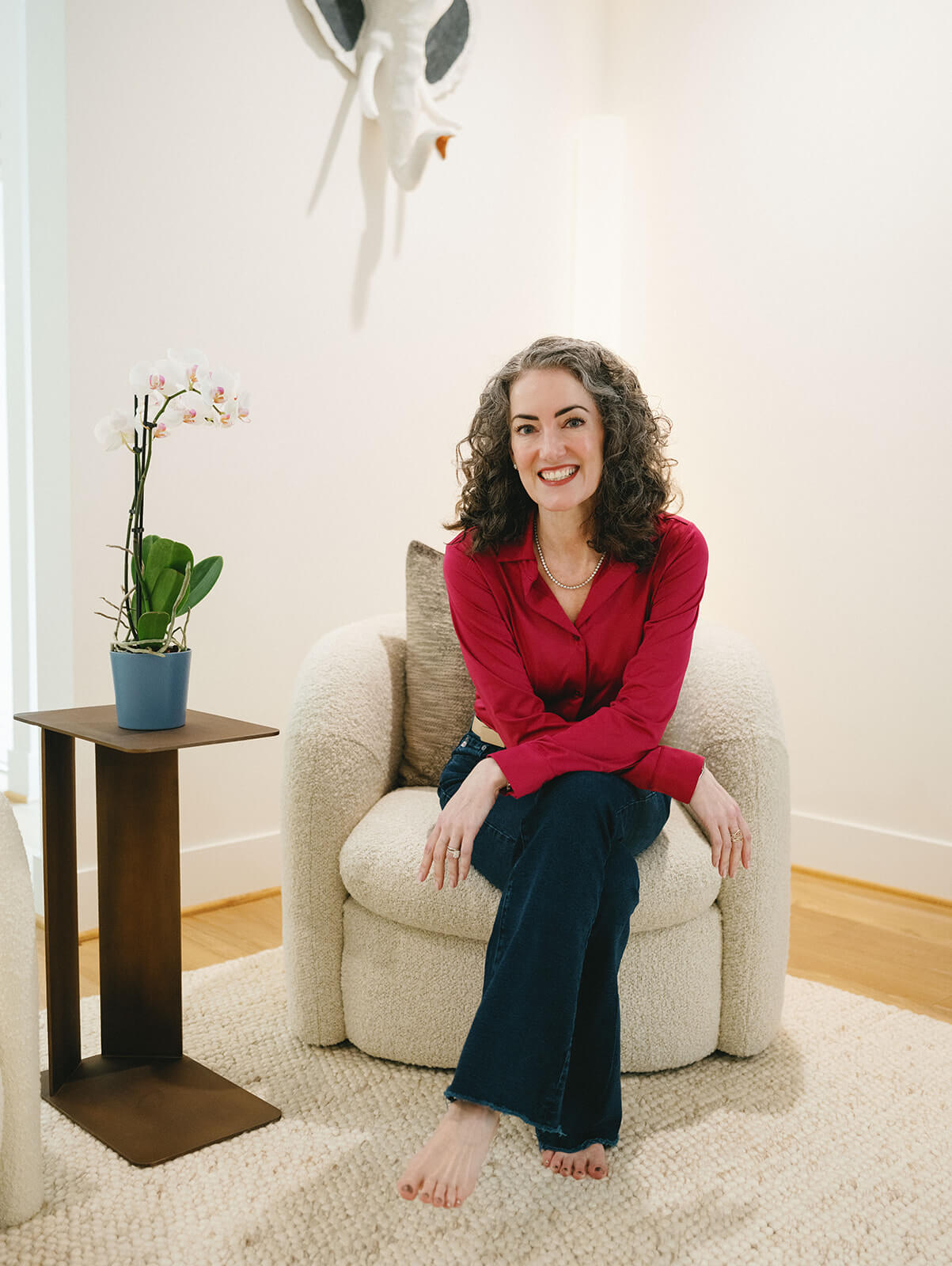
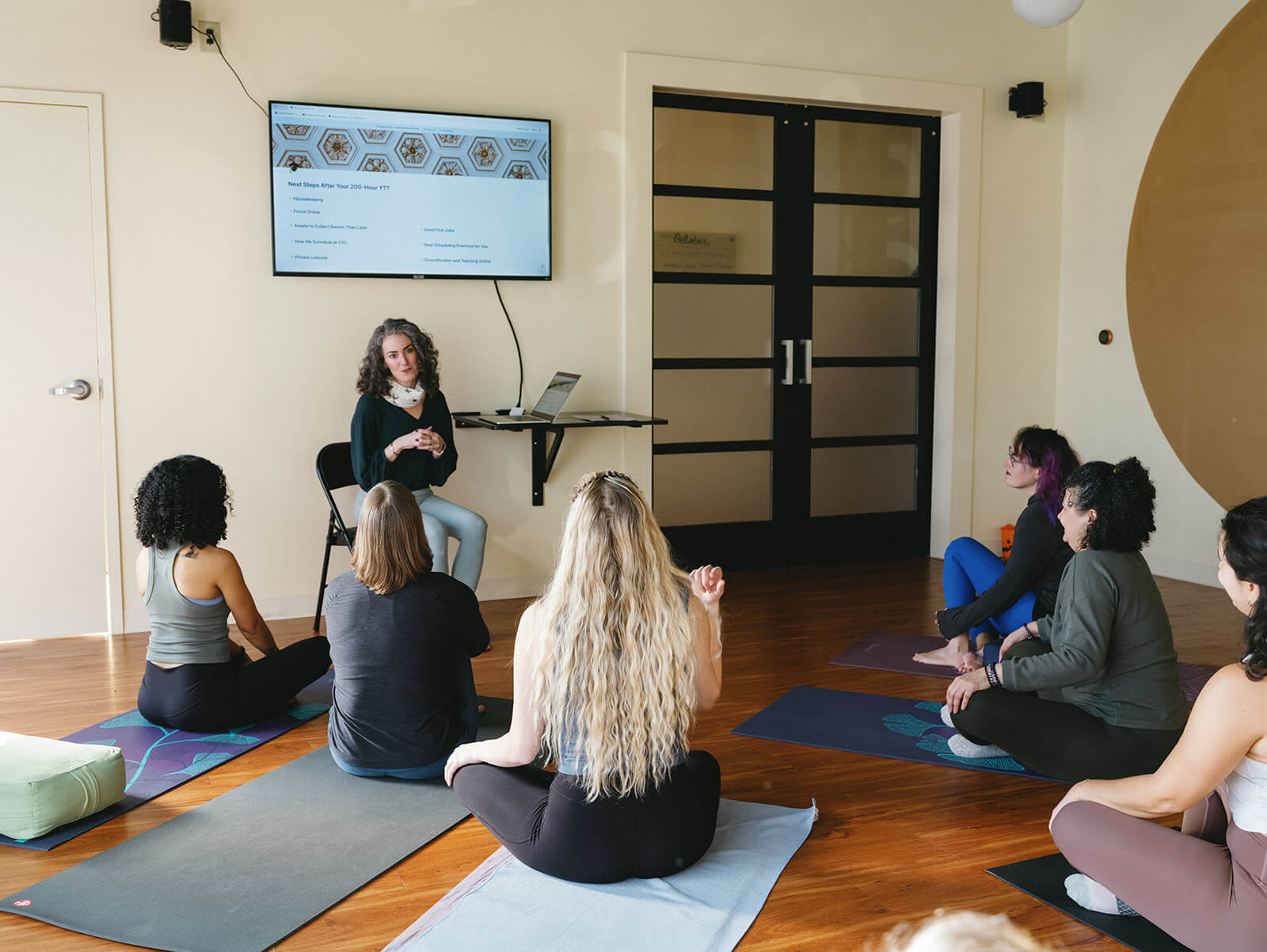
about Sage Rountree
Sage Rountree, PhD, E-RYT 500, is the author of 13 books on yoga and athletic performance, including The Professional Yoga Teacher’s Handbook, Teaching Yoga Beyond the Poses, and The Art of Yoga Sequencing.
She has trained yoga teachers since 2011 through Carolina Yoga Company and Comfort Zone Yoga, earning a 4.89/5 rating across 147 Yoga Alliance reviews.
Her 200-hour and 300-hour programs hold dual accreditation with Yoga Alliance and the American Yoga Council. Host of the Yoga Teacher Confidential podcast, she is a former Yoga Journal columnist, studio owner, and faculty member at the Kripalu Center for Yoga and Health.
ready to explore what this could look like?
If you’ve been thinking about starting a yoga teacher training—or improving the one you already run—I’d love to hear what you’re envisioning. Tell me about your studio and what you’re imagining. I read every inquiry personally, and I’ll be honest about whether I think it’s a good fit.
