
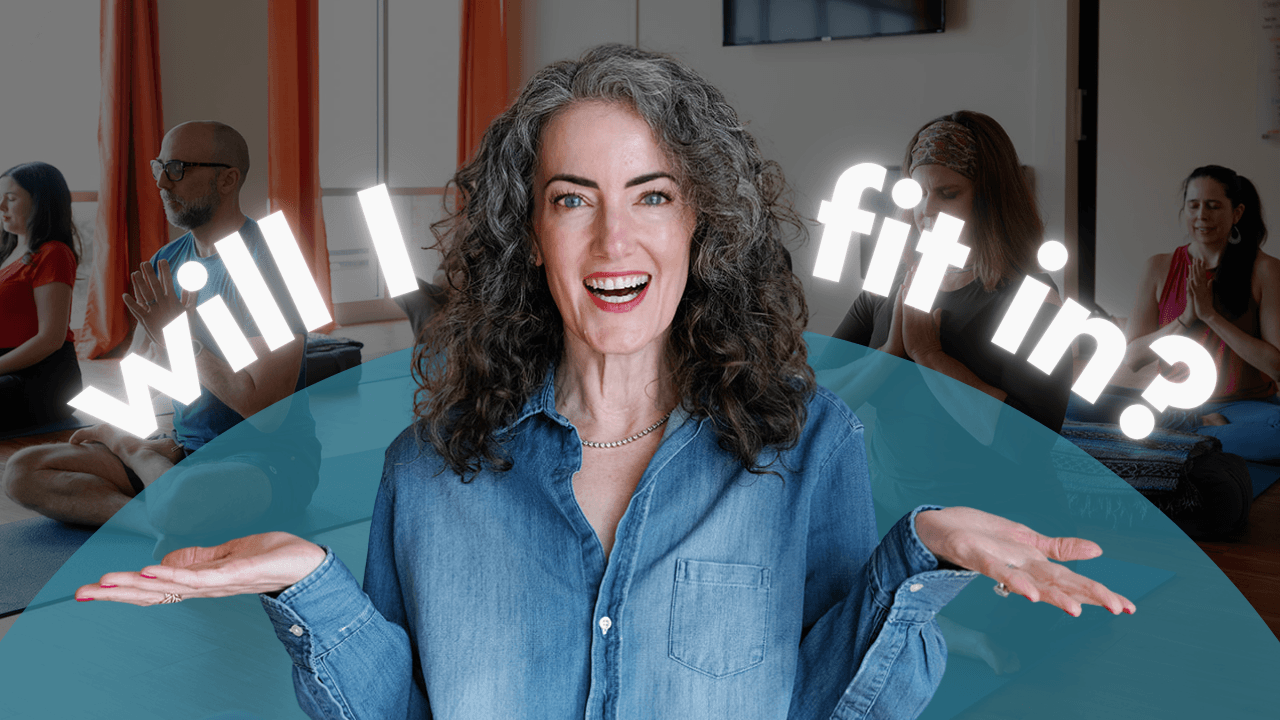
“Will I fit in?”
A 200-hour yoga teacher training is a serious investment, and I take that seriously. In over a decade of personal conversations before enrollment, that question came up every single time. Sometimes directly. More often it came sideways: “I’m not very flexible.” “I’m older than most yoga teachers.” “I’ve never done a headstand.” “I’m coming from a completely different career.”
But underneath all of it—the same question.
After training hundreds of teachers, here’s what I’ve learned: if you’re asking that question, you’re probably going to be fine. Because caring enough to wonder is the prerequisite. Everything else, we can teach.
If you want the high-level due diligence read before this closer look into what’s inside, start there.
This post is my most complete answer yet to this question! It covers what a 200-hour yoga teacher training actually is, what you’ll learn, how the program works, what it costs, and what support you receive after you graduate.
Who This 200-Hour Yoga Teacher Training Is For
The people who succeed in a yoga teacher training like mine are not the most advanced practitioners in the room. They’re the ones who want to teach—not just deepen their own practice—and who understand that teaching is a craft that can be learned, practiced, and refined over time.
Over the years, I’ve trained professional poker players and salsa dancers. Nurses and doctors. Retirees and career changers. A woman in her seventies. A man who had never taken a yoga class in his life. Every single one of them asked some version of “will I fit in?” And every single one of them did.
That’s because this training isn’t built around a particular kind of body or a particular career background. It’s built around a belief: your life experience is your greatest teaching asset—not something you need to overcome.
You’ll fit in if you want to teach, if you’re willing to create your own opportunities rather than wait for someone to hand you a job, and if you’re ready to treat teaching as a serious craft.
You won’t fit in if you’re looking for a power vinyasa or hot yoga certification—that’s not what we do here. And I’ll say something most trainings won’t: teaching yoga is a very good side hustle. It is not a reliable full-time income without real business acumen, financial stability, and some luck. I’d rather tell you that upfront.
What You Actually Learn in a 200-Hour Yoga Teacher Training
The promise is this: become the kind of yoga teacher who can walk into any room and teach whoever’s there. Not just certified—ready. Ready to walk into a gym, a studio, a community center, a corporate office, and teach a balanced, confident class for whoever’s sitting on the mats.
You can see all 10 units and 59 lessons on the 200-hour yoga teacher training program page.
The way we get there is through frameworks. Two that I created—and that programs around the world now build their curricula around:
6–4–2: Six moves of the spine, four lines of the legs, two core actions—a checklist for balanced movement. Not a pose-counting formula. A structural lens for building sequences that serve real bodies.
The S.E.R.V.E. Method: Structure, Experience, Repeat, Vary, Evolve. A sequencing system that gives you a repeatable process for planning any class, for any level, in any setting.
In this training, you learn these frameworks from the person who created them—a different experience than reading someone else’s interpretation.
The curriculum covers eight modules: philosophy, anatomy, sequencing, cueing, classroom management, business foundations, and practice teaching. You receive video lectures, a private podcast feed, full transcripts of every lecture, and a workbook built around the exercises in The Professional Yoga Teacher’s Handbook. There’s also a custom GPT assistant trained on the curriculum frameworks—available around the clock for your planning and teaching questions.
How the Online Format Works
The program is fully online, Yoga Alliance–registered, and American Yoga Council–accredited. When you register, the full curriculum is yours immediately—two-plus months of self-paced study before your live cohort begins. That’s intentional. The goal is for you to absorb the material at your own pace so you come into the live sessions ready to practice, not cramming.
Once the live cohort starts, the commitment is about two and a half hours on live calls per week for twelve weeks. You practice yoga together, discuss the material, and—most importantly—you actually teach. You practice with your teaching buddies, receive feedback, and refine your skills before you stand in front of a paying class.
The full certification spans roughly six months. After graduation, you receive an additional six months of connection and support through the Prep Station, my yoga class planning membership.
What It Costs—and Why
Full price is $3,500, or four payments of $875. The early-bird rate is $2,997, offered in the first weeks each time applications open.
Context matters here. Most in-person 200-hour trainings cost $3,000–$5,000 in tuition alone—before travel, lodging, meals, and time away from your life. A destination training can run $5,000–$9,000 all in. At the other end, the cheapest online YTTs start at $11. You get pre-recorded videos, no live interaction, no practice teaching, no real feedback—and a credential that teaches you about yoga without teaching you how to teach it.
This program sits at the premium end of online offerings. A single weekly yoga class pays $40–$75 in most markets. Teaching two classes a week, you’d earn back your investment in well under a year—while building a career on frameworks designed to serve you for decades.
What Happens After Graduation
This is the part most trainings skip.
After you finish the program, you receive six months of Prep Station membership—live monthly calls, access to the Movement Library with 200+ sequences, lesson planning tools, and three continuing education credits per month. The day you complete the program, you’re not on your own.
You also become a permanent member of the Zone, a free community of 3,400+ yoga teachers. Monthly calls, peer support, and ongoing resources—for as long as you want them.
And there’s a clear path forward. The 300-hour training covers yin, restorative, yoga nidra, balance, core, theming, and more. I designed the two programs to connect intentionally. The goal is to keep teaching you for years, not hand you a certificate and wave goodbye.
If You’re Not Ready to Commit Yet
If this sounds right but you’re not ready to enroll, here’s the path I recommend.
If you’re still deciding between programs, my guide to choosing an online yoga teacher training gives you a checklist that applies to any program, including this one. Start with Find Your Teaching Voice, a free mini-course inside Comfort Zone Yoga®. It gives you a real experience of how I teach and whether the online format works for you. Then read The Professional Yoga Teacher’s Handbook. If that book resonates, we’re philosophically aligned. If it doesn’t, I’ve saved you $3,500.
Then come to a live open house. I host one or two each enrollment cycle; the next is on the schedule inside the Zone. Ask anything.
By the time you’ve done all three, you’ll know.

