
There’s a skill you use every time you step in front of a yoga class, and chances are no one ever formally taught it to you: storytelling.
You tell stories when you introduce a theme. You tell stories in your newsletters. You tell stories on your website, whether you realize it or not. And the difference between a story that lands and one that falls flat often comes down to structure—not talent.
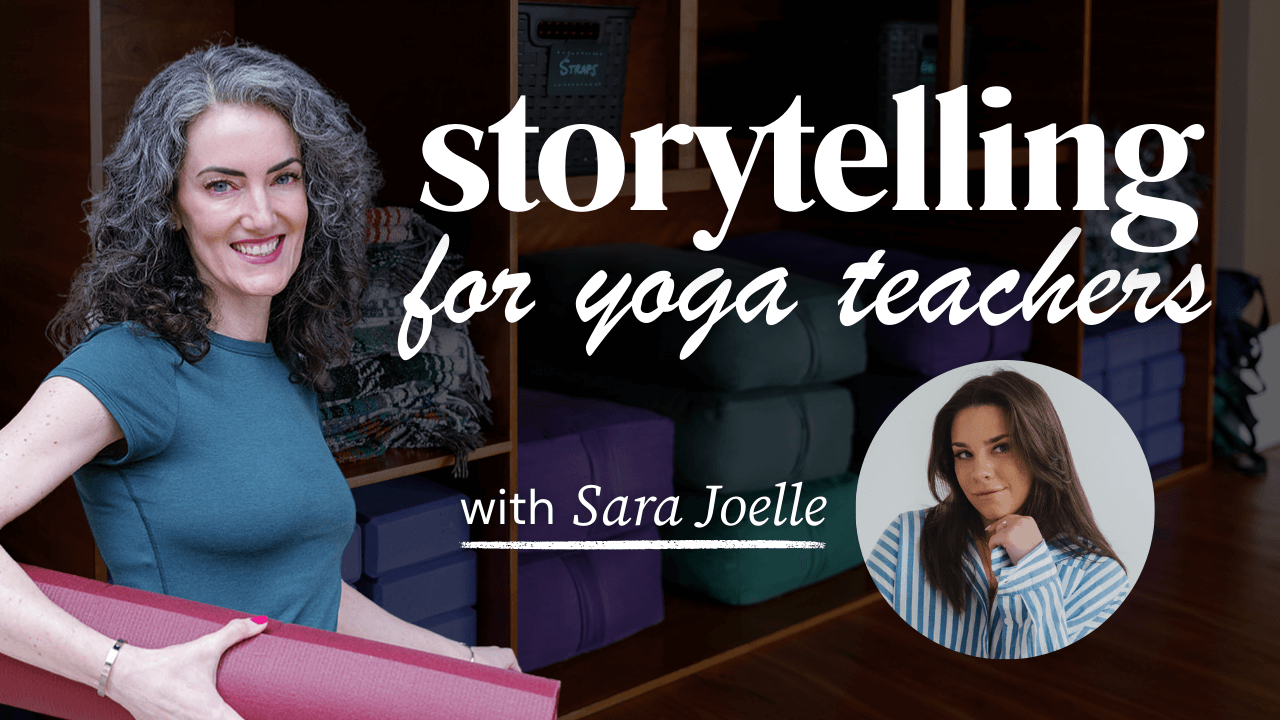
I recently sat down with Sara Joelle, a website copywriter and marketing mentor, to talk about storytelling, sales mindset, and what actually belongs on a yoga teacher’s website. Sara works with business owners on their websites, newsletters, and marketing—and her advice translates directly to the work we do as yoga teachers, both in and out of the classroom.
Two Methods for Storytelling That Work Anywhere
Sara teaches two approaches to storytelling, and both are practical enough to use right away.
The first method starts with the point. If you already know the message you want to deliver—whether it’s a class theme, a newsletter topic, or a social media post—ask yourself what feeling that message evokes. Does it make you feel empowered? Grounded? Relieved? Once you’ve named the feeling, think of a story from your own life that captures that same emotional experience. The story becomes the vehicle for the message.
The second method flips the process. Start with a story—something that happened to you, a moment that stuck. Name the feelings you experienced in that story. Then ask yourself how those feelings connect to a broader lesson or takeaway you want to share.
Sara illustrated this with a story about playing Cards Against Humanity with her family. She kept losing because she was playing cards she thought were funny—but her six-year-old didn’t agree. The moment she adjusted her choices to match what her son actually found hilarious, she started winning. The lesson she drew from it: say what your audience needs to hear, not what you want to say. That’s equally true for writing a newsletter, building a website, or theming a yoga class.
Both methods work because they connect the personal to the universal. You start small—a game night, a moment after class, a conversation in the parking lot—and you expand outward to something your audience can see themselves in.
The Mindset Shift Around Selling
One of the most powerful parts of our conversation was Sara’s take on the mental block so many yoga teachers have around selling. Her first piece of advice was blunt: nobody told you that you’re annoying. You told yourself that.
The narrative that you’re being too salesy, that people are going to unfollow you, that you’re bothering people with your workshop promotion—that story lives in your head, not in reality. And the only person repeating it is you.
Sara’s approach is to break the fourth wall. At the start of a launch, she tells her audience directly: “I’m going to be talking about this a lot for the next two weeks.” That simple acknowledgment opens the door for you to show up fully without constantly second-guessing yourself.
For yoga teachers, this reframe is especially important. You believe in the power of yoga. You’ve experienced it yourself and you’ve seen it change your students’ lives. Telling people about your class, your workshop, or your training isn’t selling—it’s serving. You can’t help people who don’t know what you offer.
What Actually Belongs on a Yoga Teacher’s Website
Sara had clear, practical advice about yoga teacher websites, and it starts with logistics. If a potential student visits your site and can’t immediately find when your classes are, where they are, and where to park, they’re not coming. Full stop.
Beyond the basics, here’s what Sara recommends:
Real photos of your space. Not stock images of stacked rocks or a random zen scene. A picture taken with your phone of the actual room where people will practice is more effective than the most beautiful stock photo.
The level and intensity of your classes. Is it beginner-friendly? Is it hot yoga? Sara pointed out how often studios forget to mention these details because they seem obvious to the people running them. They’re not obvious to someone visiting for the first time.
Testimonials from real students. You probably already have Google reviews. Screenshot them and put them on your site. Or pay attention to what students say to each other as they walk out of class and—with permission—use those real words on your website.
Save your training credentials and teacher lineage for your About page. The person looking for a Tuesday evening yoga class doesn’t need to know who you studied with. They need to know if the class will work for their schedule and their body.
Conversational Copy Wins Every Time
One of Sara’s strongest points was about voice. She encouraged writing your website and your marketing materials in the exact same way you’d talk to a friend or speak in class. If you wouldn’t say it out loud to a student, don’t write it on your website.
This connects directly to teaching, too. The most effective yoga teachers sound like themselves at the front of the room—not like a different person who suddenly adopted a “yoga teacher voice.” Your students chose you because of who you are. Your marketing should sound like that same person.
Sara shared an example from a friend who had just started running and described her new shoes as so comfortable that “I heard my feet say thank you.” That’s the kind of language that resonates—because it’s real and specific. Your website copy should feel the same way.
Don’t Block Your Blessings
Sara closed our conversation with a mindset she returns to often: don’t block your blessings. When you downplay good news, dismiss your own success, or project negativity onto situations before they happen, you’re getting in your own way.
Your brain doesn’t distinguish between what’s true and what you tell it. If you repeat that you’re not good enough, that selling is gross, that nobody wants to hear from you—that becomes the operating system you’re running on. But you can choose differently. You can choose to show up, share what you offer, and let the results follow.
This applies to how we market our classes, how we show up on social media, and how we carry ourselves as teachers. When you believe in what you’re doing and share it with conviction, your audience responds to that energy.
Put Storytelling to Work This Week
If you’re looking for a practical place to start, try Sara’s first storytelling method this week. Pick the theme or message you want to deliver in your next class. Name the feeling it evokes. Then find one small, specific moment from your life that captures that feeling. Open your class with that story—and watch how your students lean in.
Want to hear the full conversation? Listen to this episode of Yoga Teacher Confidential: Storytelling for Yoga Teachers with Sara Joelle.

