
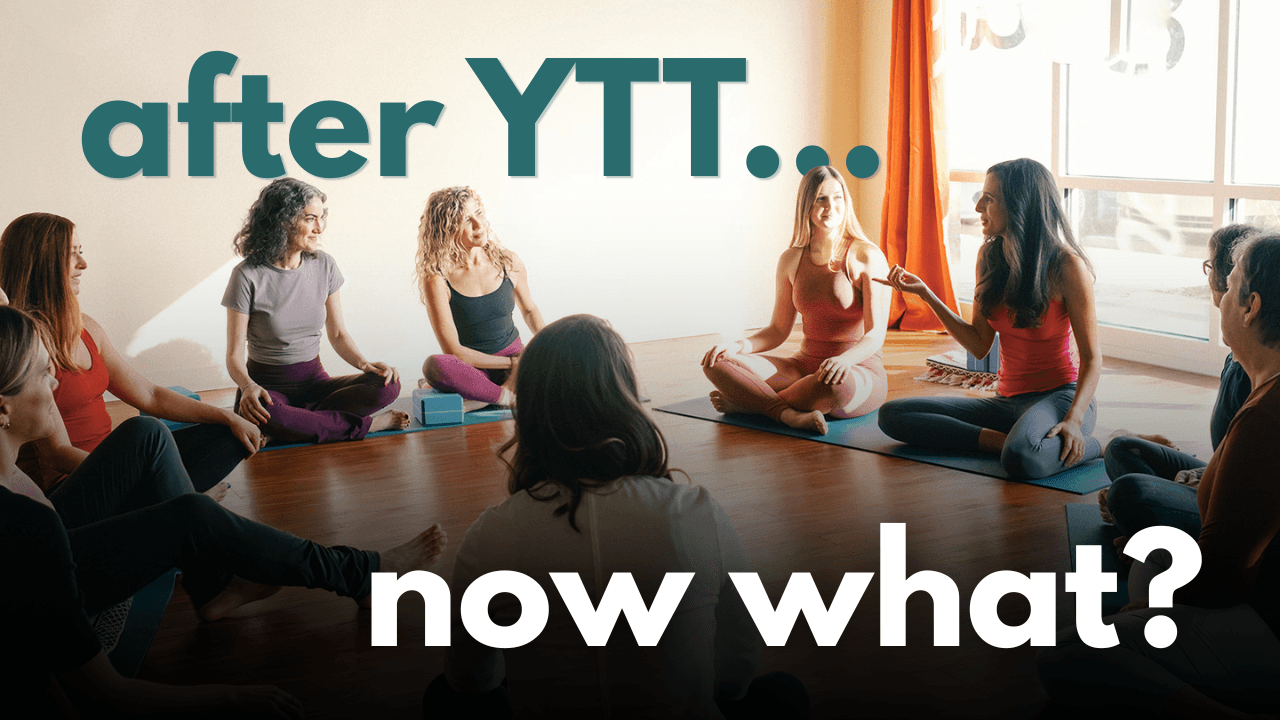
You finished your 200-hour training. You have a certificate, a binder full of notes, and a question nobody quite prepared you for: now what?
I’ve been training yoga teachers since 2011, and that question is the one I hear most. Not “how do I cue a backbend” or “which playlist works best.” It’s the one that shows up about a week after graduation, once the celebration fades and the cohort group chat goes still: I’m certified . . . so why do I feel unsure about what to do on Monday?
Here’s the reassuring part. The path from certificate to confident teacher is more predictable than it looks. You don’t need another training to start. You need a plan for the next 90 days, and that’s exactly what this video walks through.
Weeks 1–2: Just teach—anybody who will say yes
The single most useful thing you can do in your first two weeks is teach. Not plan to teach. Not redesign your Instagram. Not research studios for three hours. Teach.
Grab a friend, your partner, the neighbor who keeps saying they should really try yoga. Tell them you just got certified and you need practice humans. Almost everyone says yes.
Keep these first classes simple. Run a balanced sequence using what your training already gave you, and practice the basics: cueing clearly, watching the room, managing your timing. This isn’t the moment to be clever. It’s the moment to get reps.
One step most new teachers skip: record yourself. Prop your phone in the corner and let it run. (Tell your students what you’re doing, and that this is for your own self-improvement.) You never have to show a soul. But watching yourself teach is the fastest feedback you’ll ever get—you’ll catch the filler words, the rushed transitions, the spot where you lost your train of thought. It’s a little uncomfortable, and it works.
Aim for three or four practice classes in these two weeks, all free and low-stakes. If your training gave you a set sequence, use it. You spent months learning frameworks for a reason. Lean on them.
Month 1: Find your people and ask for real feedback
Teaching in a vacuum gets lonely fast. By the end of month one, you want two things: a community of other teachers, and honest feedback on your teaching.
The loneliness catches people off guard. During training you had a cohort who understood exactly what you were going through. Then it ends, and the wonderful people in your life still can’t quite picture what it feels like to stand at the front of a room and wonder if you’re doing it right. If that wondering sounds familiar, you’re not alone—I wrote more about the overwhelm that hits after teacher training and why it’s so common.
So find your people, online or in person. If you don’t have a community yet, the Zone is my free space for yoga teachers—more than 2,800 of us, with monthly live calls and room to ask the questions you’re a little embarrassed to ask anywhere else. There are other good communities out there too. The point is simple: don’t do this alone.
Then go get feedback. Ask your practice students what they actually experienced, but skip “did you like it?”—that one only ever earns you a polite “it was great.” Ask sharper questions instead. Was anything confusing? Did the pacing feel right? Was there a moment you weren’t sure what to do? Specific questions get useful answers. And if you can find a mentor or a more experienced teacher willing to watch you and give real notes, that’s worth more than almost anything else in your first year.
Month 2: Go find the work
By month two you have a few reps and some support behind you. Now it’s time to find real teaching opportunities, and the honest truth is that nobody is going to hand you a job. You go find it. That can feel intimidating, but it also means you’re not waiting around for permission.
Start a list of every place within a reasonable drive that offers yoga or could. Studios, sure. Also gyms, community centers, recreation departments, corporate offices, senior centers, schools, and sports teams. The range of places that want a yoga teacher is wider than most new grads imagine.
Then reach out. Email the studio owner or the fitness director, and keep it short and professional: introduce yourself, mention your training, and ask whether they have openings or would be open to a trial class. Offer to sub, too—covering classes when regular teachers are away is one of the best ways to get your foot in the door, and I’ve written a whole guide on how to sub a class without apologizing or imitating the regular teacher.
A few things make a real difference. Take a class before you pitch, so you understand the studio’s vibe and students before you ask to teach them; walking in cold for a job, having never been a student there, is a miss. Be flexible on time and format, because your first gig probably won’t be your dream slot. It might be a 6 a.m. class at a gym or a Tuesday-afternoon gentle class at a rec center. Take it. Gyms and community centers are some of the best training grounds for new teachers—every class is practice, and every class puts you in front of students who might follow you to the next thing. And don’t let a no discourage you. Schedules are limited and timing is everything, so a no today usually means not right now. Stay in touch, keep subbing, keep showing up.
Month 3: Teach the same plan on repeat
By month three you might have a regular slot, like a weekly class at a gym or community center. If you don’t yet, keep knocking. But if you do, here’s what matters now: consistency.
Teach the same lesson plan for a month. I know that sounds backward—aren’t you supposed to keep it fresh? Twenty years of teaching has taught me the opposite. Your students get better when they repeat a structure. They go deeper, they notice what they missed the first time, and they actually progress. You get better too: your cues sharpen, you learn what lands, and your planning time drops through the floor. If repetition makes you twitchy, read why your students want repetition, not novelty.
I want to be honest about money, too. Don’t expect to earn a lot in these first 90 days, or even in your first year. Teaching yoga is a wonderful side hustle, and building it into something more takes time, business skills, and patience. The teachers who go the distance treat this as a long game, not a sprint to fill a schedule. Stay humble, keep working, keep getting better at the craft.
Set goals that fit the season you’re in: one regular class, a few students who keep coming back, and a teaching practice that’s starting to sound like you—not a copy of your training teacher, but something you’re building in your own voice.
Where to go from here
Your first 90 days aren’t about being impressive. They’re about mileage, community, and a handful of honest reps that turn a certificate into an actual teaching life.
If you want company while you build, two free places to start are the Zone, my community of 3,400+ teachers, and Find Your Teaching Voice, my free mini course for new teachers. When you’re ready for ongoing tools—follow-along sequences, planning resources, and monthly live calls with me—the Prep Station is my membership for working teachers.
And if you’re still choosing a training, or you finished one that left you wondering ‘now what?’ on graduation day, my Comfort Zone Yoga® 200-hour yoga teacher training is built so that question never has to hang in the air. It’s Yoga Alliance–registered, American Yoga Council–accredited, and designed around the frameworks I’ve been refining for more than 20 years.
Wherever you are—still in training, freshly graduated, or already teaching—you already have what you need to begin. Start with one class this week.

